• Welcome……
  • About Me
  • Blogs
    • Miracles
    • One Year
    • Broken Crayons
    • The Forest
    • The Wolf
    • The Truth IS….
    • Guilt
    • Keaton Sawyer – My reason
    • Disneyland
    • The Unfiltered Truth About Motherhood
    • Another Run, Another Bottom
    • Wreckage and Damage
    • Journey through Chiari Malformation

Surviving The Odds

  • Keaton Sawyer – My reason

    February 7th, 2020

    Keaton Sawyer—my son, you are my reason for everything in life today.

    Growing up, I always dreamed of becoming a mother, although I had no idea what that truly meant. I’ll never forget the day I found out I was pregnant. I had walked into a room where someone had peanut-butter coffee creamer, and the smell hit me so hard it sent me running to the bathroom. I hadn’t even had my morning coffee yet, and instantly I knew something wasn’t right.

    A friend of mine gently suggested I take a pregnancy test. At first, I resisted. After years of trying, after doctors telling me that PCOS and endometriosis would likely make pregnancy impossible, I had all but given up hope. But deep down, I couldn’t shake the feeling that she might be right.

    So I went and bought two tests. Every test I’d ever taken before had been negative, and I wanted to be sure. I didn’t want to be alone, so I took the test with someone by my side. She looked at the result before I did, and the expression on her face said it all—I was pregnant.

    I nearly collapsed. The shock was instant and overwhelming. I wasn’t happy, I wasn’t sad—I was frozen, unable to process what was happening. The truth was, at that time in my life, I had been acting out of hurt, fear, anger and a mix of other emotions, making choices that ultimately lead to something life-changing. Here I was—pregnant.

    The first call I made was to my best friend. I was shaking so badly that she thought I was about to tell her something tragic. Then I called my parents, who were on a cruise in Mexico, because I couldn’t keep the news in. I knew my mom would practically fall over when she heard—and I was right. Her reaction mirrored mine: nothing but pure shock and disbelief.

    Once the news settled, excitement began to creep in, but so did anxiety. This wasn’t the way I imagined becoming a mother. My choices had led to an unexpected pregnancy and, ultimately, to raising a child without a responsible father. That reality terrified me. Yes, I had the support of my family, and I was grateful, but still—I longed for things to be different, both for me and for my child.

    Pregnancy was anything but easy. Around that time, my mom became sick and needed open-heart surgery, which added even more stress to an already overwhelming season. My own health was also difficult to manage, and I often felt like I was carrying the weight of the world on my shoulders. At my 14-week ultrasound, surrounded by my mom, close friends, and the baby’s grandmother, I learned I was having a boy. Instead of pure joy, I broke down in tears—a mix of sadness, fear, and guilt that I couldn’t quite explain. It wasn’t that I didn’t love him; it was that life felt so uncertain, and I was already exhausted. Those feelings stayed with me through much of the pregnancy, as I battled constant sickness and overwhelming fatigue, just counting down the days until it would finally be over.

    Then, five and a half weeks early, complications forced me into an emergency C-section. The fear in that moment was indescribable. Everything I had carried for months—the stress, the guilt, the questions of whether I was strong enough—came rushing in at once. At first, I couldn’t hold my son, and the waiting felt endless. But the moment they finally placed him in my arms, everything shifted. The noise of the world seemed to quiet, and in that instant, I felt what people talk about—that indescribable, unshakable love of a mother.

    That day, Keaton Sawyer entered the world, and everything changed. He became my reason for living, my reason for fighting, my reason for becoming. The journey to him was not easy, but his little soul has been the greatest blessing of my life. Every struggle, every hardship, and every tear was worth it, because they led me here—to him. And as I held him close, I knew without a doubt that no matter what lay ahead, my greatest purpose would always be found in being his mom.

    To other moms who may read this: I want you to know that if your journey hasn’t looked the way you imagined, you are not alone. Motherhood isn’t always picture-perfect, and sometimes it’s born out of the hardest, messiest circumstances. But love has a way of redeeming even the most unexpected beginnings. No matter how your story started, the love you have for your child is enough—it’s powerful, it’s real, and it will carry you through.

  • Whos decision is it really?

    October 27th, 2025

    In today’s world, the medical community has changed drastically—and will continue to evolve as time goes on. Twenty years ago, children’s mental health wasn’t recognized or accepted the way it is today. Even if a parent advocated for their child and begged for a doctor’s help, they were often turned away with the dismissive reassurance that “it’s just a phase—they’ll grow out of it.” Back then, children weren’t typically evaluated for mental health concerns until mid-adolescence—around 14 or 15—and by that point, it was often too late. The damage had already begun.

    Today, as many as 8.4% of children are diagnosed with ADHD at school age. ADHD is a chronic, debilitating disorder that impacts nearly every area of life and functioning. Without proper treatment, symptoms can carry into adulthood, often leading to low self-worth, disorganization, and social struggles.

    And ADHD is just one example. Children face countless mental health challenges as they grow. As parents, we’re often faced with hard choices: do we advocate fiercely for our children, or do we hope the problem will fade on its own? It’s easy to say what we would do—until we’re the ones living it.

    For me, the choice wasn’t really a choice at all. My child came before myself. It wasn’t about my fears or feelings—it was about doing what was best for him. He was struggling, and it was affecting not just him, but everyone around us.

    It’s easy to stand on the outside and judge another parent’s decisions—whether it’s about medication, diet, or friendships. But every parent makes the most informed choice they can, based on what they know and what they have. We may not agree with every choice, but that’s the beauty of parenting—we all get to do what we believe is best for our own children.

    When I made the decision to put my son on ADHD medication, I had already heard all the opinions—“kids are overmedicated,” “try the natural way,” “medicine changes their personality.” I also had my own life experience to weigh against those messages. I’m a strong advocate for mental health treatment, including medication, because I’ve lived the proof.

    I’ve had ADHD my whole life, but it went untreated until adulthood. For years, I struggled to find balance—on and off medication—each time believing I could “go natural,” only to end up worse off. Stability finally came when I accepted help and stayed consistent with the right treatment.

    So when it came to my son, I was willing to take the risk. If it didn’t work, we could always go back to other methods. It hasn’t been an easy journey, but I’ve stood beside him every step, fighting for answers. Today, with the right diagnosis and the right medication, he’s more stable than I ever imagined three years ago.

    One of the most important reasons I fought so hard for my son’s mental health was to help him avoid the same consequences I faced from untreated mental illness. Seeing him for who he is, hearing him, and responding with compassion is what has gotten us here.

    We must advocate for our children—even when it’s uncomfortable, even when others don’t understand, even when we’re not sure we’re ready to ask for help. Because if not now, then when? How long do we wait before “the right time” becomes too late?

  • The Wolf

    October 22nd, 2025

    Have you ever heard the quote about the battle of two wolves?

    “There is a battle of two wolves inside us all. One is evil. It is anger, jealousy, greed, resentment, lies, inferiority, and ego. The other is good. It is joy, peace, love, hope, humility, kindness, empathy, and truth. The wolf that wins is the one you feed.”

    The principles of the good wolf — joy, peace, love, humility, and truth — are also the foundations of recovery. Working the steps gives me the chance to practice these principles daily. Recovery is about maintenance — spiritual and emotional — and the steps provide the opportunity to “take the trash out,” to clean house and build a stronger foundation built on honesty, humility, and love.

    But when I was using, I wasn’t living by any of that. Getting loaded turned me into a dishonest, selfish, greedy, and egotistical woman who truly believed the world revolved around her. I was angry, resentful, and constantly breaking my own moral code. I remember sneaking into my parents’ room late at night, searching my dad’s pants for cash. If there wasn’t any, I’d grab his debit card, go to the gas station, pull out money, and sneak it back into his wallet like nothing happened. Then I’d look my parents in the eyes and lie. I had no concern for the damage I was doing — to them, to myself, to my soul.

    I grew up believing in family, loyalty, trust, and love — but through years of using, I lost sight of all of it. The shift was slow and subtle, but by the time I was an adult, repairing relationships wasn’t even a priority anymore. Dishonesty and manipulation had become second nature. Even now, with several years of recovery behind me, my family relationships are still complicated. There are moments of honesty, love, and forgiveness — but also tension, distance, and old wounds that still sting. The wolves exist there, too. Both of them. And sometimes, they’re fighting at the same time.

    A Story of the Wolves at War

    A while back, I got pulled over — the first time since I’ve been clean. Being on probation, my mind immediately jumped to worst-case scenarios. I flashed back to a time a year earlier, when I’d been pulled over in the same area. Even though I had all my paperwork, the officers knew who I was and treated me like I was still that broken, addicted version of myself. I felt small, powerless, and ashamed.

    Sitting in the driver’s seat this time, my mind started spinning again.
    The bad wolf started whispering: “This is it. They’re going to take you. Who’s going to take Keaton? People never change — you’ll always be that girl they remember.”

    But then the good wolf spoke up.
    Humility. Stability. Truth.
    I reminded myself: I am clean. I am rebuilding my life. I have a valid driver’s license. I’m a productive, self-sufficient member of society — a mother who shows up, sober and steady. The officer was respectful, kind, and professional. He even cut me a break. And in that moment, I felt the shift.
    That’s what happens when you keep feeding the good wolf.

    Feeding the Right Wolf

    So which wolf wins? I don’t think it’s a one-time choice. Some days, I feed the good one. Other days, fear or anger still slip in. None of us live in constant peace and joy — and most of us don’t live fully in resentment or ego either. The truth is somewhere in the middle, in the balance, in the awareness that every moment is a choice.

    If you’re reading this and you’re in that battle right now, know this: the wolves are real, and the fight is real. The bad wolf doesn’t disappear — it just gets quieter the more you stop feeding it. The good wolf, the one that carries honesty, humility, gratitude, and love, gets stronger with every act of recovery, no matter how small.

    No matter how long we’ve been clean, the battle never really stops — but the peace that comes from choosing the good wolf makes every fight worth it.

    Bit by bit, moment by moment, that’s how we rebuild.
    That’s how we heal.
    That’s how we change.

    Feed the right wolf. Keep choosing the small, steady acts of recovery.
    They add up. They turn into proof.

  • Addiction is a Deadly Disease

    September 28th, 2025

    This is deep, emotional, and full of pain — but what I’m about to say, you MUST hear.

    Addiction is a DEADLY DISEASE.
    If it doesn’t kill you outright, it will kill you mentally, emotionally, and spiritually — until you wish you were dead.

    Addiction has many faces, and affects everyone differently.
    Regardless, it carries familiar traits: selfishness, self-centered, self-seeking motives.

    Addiction is progressive.
    It is lonely, dark, and empty, filled with stories of horrific and painful things.
    It destroys not only the addict but the people who love them. Addiction is a family disease.

    As addicts, we didn’t wake up one day and decide, “I’m going to become a junkie.” Somewhere along the way, we found solace in a substance that numbed the pain — and that was the beginning.

    In and out of treatments and detoxes, we fight for our lives. People on the outside judge and ask: “Why can’t you just stop?”

    That’s a great question…

    Why can’t we?

    The reality is: it’s called powerlessness.

    Have you ever felt like you had absolutely no control over something? No matter what you did or didn’t do, you couldn’t change the outcome?
    Even knowing it’s killing you, making the changes necessary feels impossible.
    That’s powerlessness.

    Some people believe it’s all about choice. And in a way, they’re right. We did make one choice. But that one choice robbed us of the ability to keep choosing.

    Addiction is sneaky and powerful. It looks like your friend, your lover, your everything — until you’ve lost it all.

    By the time you realize what’s happening, denial has you convinced you need it.
    Need it to get out of bed. Need it to go to work. Need it to talk to people. Need it to look in the mirror. Eventually, you need it to do life at all.

    You may start to recognize the problem, but guilt and shame keep you from being honest with the people you love most. Fear of life without it keeps you trapped.

    Slowly, you isolate. You stop showing up for family. Work suffers. Bills go unpaid. Life slips away, and you use even more to cope.

    Now you’ll go to any length for that five minutes of relief — even if it costs you your home, your freedom, or the people you love. And still, you won’t stop.

    Why?

    Because powerlessness, mixed with guilt, shame, sadness, pain, and fear, makes a paralyzing combination. The road to recovery feels impossible.

    This is the reality of addiction, and it cannot be sugar-coated.

    For me, my story carries the same devastation. I shattered my family, destroyed relationships, and lost myself completely, more than once.

    Recovery has felt beyond impossible at times. Fighting for my life has felt pointless. But even in my darkest days, one thing kept me reaching: there is a little boy who calls me Mom — a boy searching for safety, security, happiness, and love. To turn away from that would have felt like failing at life itself, not just to be swallowed by addiction.

    Addicts need a reason to stay clean. At first, mine was my son. Today he gives me the power and strength to stay clean for myself.

    Even when the disease tried to swallow me whole one last time, I swallowed my pride and fought for my life so my son wouldn’t have to grow up without his mom.

    I have never felt more powerless than when I risked losing my son to this disease. My choices brought me to a new low — my deepest bottom.

    But out of that storm came a light and a strength I didn’t know I had: the ability to surrender, to build a new foundation, and to begin a new journey worth fighting for.

    I don’t want to bury my past, but I won’t let it strangle me either.

    My past has made me stronger, braver. It’s taught me how to recognize the wolves and survive the cocoon.

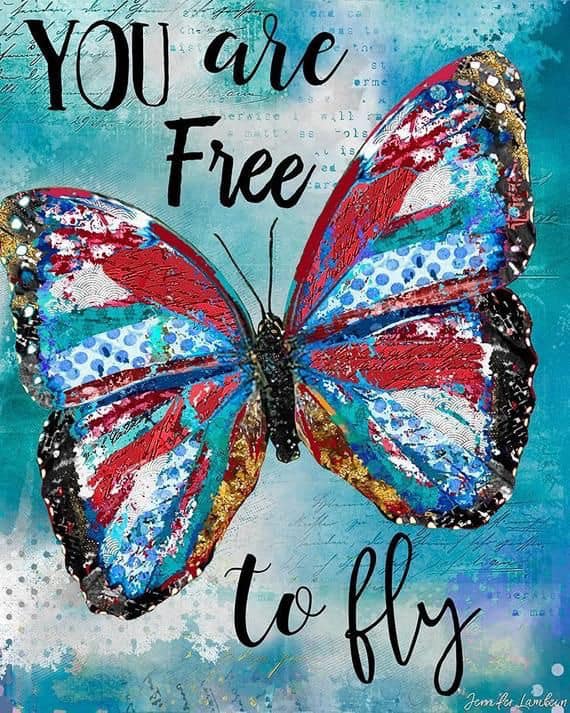
    Becoming a butterfly took time, pain, and transformation.
    But today, I fly free.
    Today, I have the freedom to choose life.

    69373904_10217430699212389_6456207075709026304_n

  • The Last Run

    September 22nd, 2025

    There are moments in life that change everything, and for me, that moment was the birth of my son. I thought his arrival would be the turning point—the chance to finally become the mother I had always wanted to be. And eventually, it was. But before it could become the beginning of my recovery, it marked the start of my last, most destructive run.

    The Decline

    On the outside, I looked like a mom adjusting—stressed, exhausted, but capable. On the inside, I was already slipping. The medications I’d been given in the hospital had awakened cravings I thought I’d buried, and soon I was seeking again—doctor visits, excuses, any way to quiet the pull.

    I left my son with my mom under the guise of needing “a break,” but really I was escaping to the casino, desperate for relief. I started seeing a doctor for anxiety and was prescribed medication. At first, it felt manageable, even justifiable, but before long I was taking more than prescribed and slipping into old patterns.

    I told myself I was still managing—but I wasn’t. I was driving loaded with my son in the car, convincing myself I was fine. The truth was clear to those around me, even if I refused to see it. Eventually, they stepped in. She’s using again, they said. She needs help. We will take him.

    Selfishly, I wanted the freedom to use. But I didn’t want to put my baby in harm’s way. Signing him over felt like I could finally breathe, with every intention of going straight to treatment.

    The Spiral

    That was the plan. But promises don’t mean much when addiction is in control. The silence that followed was deafening. Without my son, the house didn’t feel like a home—and before long, I didn’t have a home at all. I became homeless almost overnight, still longing to be the mother I wanted to be, but unable to stop using.

    Homelessness was brutal. I bounced between couches, cars, and nights on the street. Each day revolved around the same cycle: how to get money, how to get high, how to keep the shame from swallowing me whole. I woke up already sick—begging, stealing, manipulating—just to feed a hundred-dollar habit. The relief was always short-lived, and within hours, I was right back where I started.

    All the while, guilt sat heavy. I thought about my son constantly—wondering what he was doing, who was holding him, whether he missed me. No amount of using could bury that pain.

    Bottoms of the Run

    One of the scariest moments came when my car was stolen. Weeks later, I found it abandoned in a casino parking garage. Police there cleared me and released it back. I should have taken that as a chance to stop, but instead, I drove back toward my hometown—still loaded.

    Red and blue lights lit up behind me. My name and history were well known in my hometown and my plate coming up as “stolen vehicle” was enough for them to swarm. Within minutes, I was face down on the pavement, guns drawn all around me. The shame burned hotter than the fear. I insisted the car was mine and pointed them to paperwork in the backseat. When they saw it, they had no choice but to let me go. But the image of that moment—guns aimed at me from every direction—never left. And still, I kept using.

    Toward the end, my brothers tried to get me into treatment. I fought it. At one point, in a rare moment of surrender, I handed over what I had to my oldest brother. My last fix. I thought it was an act of trust. Never did I imagine he would take it to the sheriff’s office. But he did—and I was charged with a felony.

    The Last Stop

    The felony charge changed everything. Suddenly, it wasn’t just another bottom—it was about losing everything permanently. I wasn’t just risking my freedom, I was risking any chance of being a mother to my son again.

    For years, I had slipped through the cracks, convinced I still had control. But this time, there was no way out. My brothers had stepped in, the law had stepped in, and the disease had finally cornered me.

    From selling myself, to the numerous dangerous people I was surrounded with, to being taken advantage of, to the damage that was done in my relationships and ultimately risking losing my son forever, I reached a bottom like never before.

    As terrifying as it was, it was also surrender. I was tired of running, tired of hiding, tired of chasing a high that never gave me what it promised. Deep down, I knew: this was it. Either I fought for my life, or I would lose it all for good.

    That April, the run ended. It didn’t end clean, and it didn’t end easy, but it ended. For the first time, I began to believe that maybe freedom was possible.

    Reflections

    Looking back, I see how close I came to losing everything. This run was darker and more destructive than anything before, and I experienced things no one should ever have to experience, but it was also the one that broke me open. Without it, I wouldn’t have found the surrender I needed.

    The felony charge, the homelessness, the prostitution, the guns drawn in a parking lot—none of those moments were enough on their own. But together, they formed the reality I couldn’t ignore. Painful as it was, it became the foundation of the life I have now.

    My son was the reason I wanted to fight, but this run taught me that wanting wasn’t enough. I had to surrender fully, one shaky step at a time, if I ever wanted to be the mother he deserved.

    Today, I get to live that choice. And though the road has not been easy, it has been worth every step.

  • A childs heartbreak

    September 22nd, 2025

    How do you recover from a heartbreak that doesn’t just shatter your world, but your child’s? How do you put words to the ache that comes from watching someone you love most—your own child—experience loss so heavy it leaves cracks in their innocence?

    We spent years trying to build, repair, and nurture a relationship that felt like family. It wasn’t perfect, but it was ours. For my son, it meant having a dad and a second mom—a sense of belonging, love, and connection. It meant laughter at the dinner table, memories made on weekends, and the comfort of knowing he had more than just me to lean on.

    And then, in the blink of an eye, it was gone.

    No warning. No slow unraveling. Just a sudden tearing away. They ripped not only my heart out but his, leaving us both standing in the wreckage of a broken family. The kind of wreckage that doesn’t just scatter memories but shatters identities—because suddenly the roles that once seemed solid, the love that once felt promised, are gone. What was once “dad” and “second mom” for my son was reduced to silence, absence, and unanswered questions.

    There’s no guidebook for how to explain abandonment to a child. There’s no “right words” when your son looks at you with tears streaming down his face and asks why people leave when they say they’ll stay, or when he is sobbing because he just wants another minute with them. The pain doesn’t just live in the moment—it lingers in the questions he carries, in the silences at night, in the empty space where their presence used to be.

    There are the moments when he reaches for them—asking for connection, craving the love that used to be so freely given—which I know it’s impossible for me to provide what was once their space. I can’t be his dad. I can’t be his second mom, thats been lost. No matter how hard I love him, those empty places remain, and that’s a different kind of heartbreak for me as his mom—to know my love is not enough to fill every hole left behind.

    For me, the heartbreak is layered. I grieve the loss of what we had, but more than that, I grieve for him. For the pieces of his childhood that will forever be marked by betrayal and loss. For the lessons about love that came too soon, too harshly.

    If I’m honest, I don’t think you ever fully “recover” from something like this. Not in the way people hope for. You don’t just get over it. Instead, you learn to live with it. You learn to build something new out of the broken pieces. You learn to pour twice as much love, stability, and consistency into your child so he knows that even if others walk away—you won’t.

    And slowly, you learn to forgive yourself for not being able to protect him from every heartbreak in this world.

    Because the truth is, heartbreak like this never fully leaves. It just becomes part of your story, part of your strength, and part of the love you carry forward—together.

    And that’s where the resilience comes in. My son is stronger than he knows, even stronger than I sometimes believe. He’s learning, little by little, that even when people leave, love doesn’t end—it continues in the people who stay. And as for me, I hold on to hope that out of this heartbreak, my son will grow into a man who understands loyalty, who values commitment, and who knows the unshakable power of a mother’s love.

    Heartbreak may have written this chapter, but resilience and hope will write the next.

  • Dear Addiction ✌🏻

    September 18th, 2025

    Our life together has been a long, winding road—full of back and forths, push and pulls, love and hate. I’ve said my goodbyes to you more times than I can count, and yet you always managed to find your way back into my life. Tirelessly. Relentlessly. Your grip was powerful, your control suffocating.

    From the very beginning, we never truly got along. You promised me relief, but instead left me sick, alone, afraid, and worthless. That became my reality, my constant companion.

    You convinced me to invite others to your party, to believe that with more people, things would be fun. But those “friends” were never mine—they were yours. Just like me, they were bound by your chains. And once again, I was left alone and afraid, trapped in the cold, dark world you created. Thanks again, Addiction.

    You knew I was vulnerable, a target, and you fed me lie after lie—that I was worthless, undeserving, and that all I really needed in this life was you. And I believed you. Every word. I was trapped.

    Countless times I tried to leave. Countless times I reached for freedom, because deep down I knew I was worth more. But every time, you pulled me back into that toxic, destructive relationship. You left me lifeless—hurt, broken, half-dead in a gutter with nothing left. You stripped me of family, friendships, self-respect, morals, values. And still, I believed I needed you to survive.

    I hated you for convincing me I couldn’t live without you. Yet at the same time, I feared that I would die without you. That is your game. That is your sickness.

    Even when I found recovery, you weren’t done with me. You showed up in different forms—casinos, unhealthy relationships, physical health, mental health. You were everywhere. Even in my dreams.

    You knew when to strike—when I was weak, when I was tired, when I was surrounded by people but still felt alone. Your power was always ready to consume me. That’s why I’ve had to become vigilant. Every day, I must protect myself against you if I want to survive.

    Because the truth is simple: you want me dead. You always have.

    But I no longer play your game. I no longer fight you on my own. Because I’ve learned something you never wanted me to believe—you are stronger than me, but not stronger than my God.

    So, goodbye, my old friend. You were never really my friend at all. You were a monster. And today, I surrender—not to you, but to the One who is stronger than you will ever be.

  • Journey through Chiari Malformation

    September 18th, 2025

    It’s 8 a.m., my alarm goes off, and I try to roll out of bed. But the second I move, I know something is wrong. My hips are on fire, my legs are stiff, and even my arms feel like I spent the night lifting weights. I lay there wondering, why do I keep waking up like this?

    And then the tears come. Because the truth is, I’ve done a lot of damage over the years. Not just mentally and emotionally, but physically too. There’s always that little voice asking: am I being dramatic, making a mountain out of a molehill, or have I really broken myself in ways I can’t undo?

    I eventually force myself up and start moving until the pain eases. But the sadness lingers. I want to be the kind of mom who has the energy to chase her little boy around the park—not the mom who’s too exhausted to keep up. I kept asking myself: what is it going to take to get back to a place of mental, emotional, and physical health?

    For years, doctors ran test after test. Thyroid problems, vitamin deficiencies, lifestyle changes—they explained part of it, but never the whole story. And then, three years ago, everything came to a head.

    It started with something so small—pink eye. Instead of giving me drops, my doctor prescribed oral antibiotics. Within three days, I was violently sick. I couldn’t stop throwing up, I became incoherent, and I couldn’t answer the simplest questions—what year it was, who the president was. I couldn’t take care of my son.

    At the ER, a CT scan revealed what had been there all along: Chiari Malformation. It had shown up on previous scans, but this time it was much worse.

    From April to July of 2022, I went from a functioning mom to bedridden. I lost vision, slipped into depression, and felt myself decline so fast it terrified me. When I finally met with a surgeon, he told me he didn’t think surgery would help—but he was willing to do it if I wanted. I was desperate. I said yes.

    And here’s the part that makes people’s jaws drop: I chose to do the surgery—and the recovery—without pain medication. Some people couldn’t believe I would even consider it with my history. Others flat-out didn’t think I’d follow through. But I did. I stayed clean.

    And let me tell you—brain surgery without pain meds was the hardest thing I’ve ever done. Harder than detox. Harder than relapse. Harder than clawing my way back into recovery, over and over. But this time, it wasn’t just about me. It was about showing up for my son. It was about proving to myself that I could face pain without running from it.

    Fast forward to today: I’m healthy. I can care for my son. I’m a full-time student, on the President’s List, and I enjoy life more than I ever did during those years I was just fighting for answers.

    The pain, the surgery, the struggle—it’s all part of my story, but it doesn’t define me. What defines me is that I didn’t give up. And if there’s one thing I want you to take from this—it’s that no matter what your battle looks like, no matter how heavy it feels, you can keep going too. Healing doesn’t always come the way we expect, but it does come. Don’t give up.

  • The Unfiltered Truth About Motherhood

    September 18th, 2025

    Motherhood is beautiful, but it’s also brutally hard. Becoming a mom changes you on every level—physically, mentally, emotionally, socially. It stretches you in ways you never thought possible, and sometimes it breaks you before it builds you back up. These are the parts of motherhood I wish someone had told me about, the things that go unspoken because they’re messy, uncomfortable, or just too real.

    Physically, motherhood takes a toll you can’t fully prepare for. Sleep deprivation has a way of making you feel like you’re actually going insane—it’s not just being tired, it’s an all-consuming fog that makes you forget your own name, cry over spilled milk (literally), and wonder how you’ll make it through the day. My son cried if he wasn’t held, and I went months without consistent sleep. Nights blurred into days, and exhaustion became my new normal. Your body doesn’t always “bounce back” either, and I had to learn to stop seeing that as a failure and start honoring it as proof of all the work my body has done to grow and sustain life. Breastfeeding, something I thought would come naturally, turned out to be painful, frustrating, and nothing like the dreamy photos I’d seen. In the end, I was unable to get my son to latch, and I still carry guilt that I never got the same connection I watched other moms seem to have so easily. It felt like one more way I had fallen short, even though I know now it wasn’t my fault. And there are days when I feel completely “out of touch,” drained by little hands pulling at me nonstop. Then the hormones hit—postpartum hair loss, mood swings, rage, sadness. It feels like puberty, heartbreak, and exhaustion rolled into one.

    The mental and emotional weight of motherhood is something no one prepared me for. “Mom guilt” shows up for everything, even when I know I’m doing my best. I’ve questioned myself constantly—did I say the right thing, am I giving enough, am I messing this up forever? There are days when I feel invisible, like my identity is only “Mom” and not a woman capable of living her dreams. What surprised me most was how I could love my child fiercely and still hate parts of parenting. Both can be true, and admitting that doesn’t make me a bad mom—it makes me human. Sometimes I grieve my life before motherhood, the version of me that had freedom and spontaneity. And though I am rarely ever physically alone, I’ve had moments of deep loneliness that caught me off guard.

    Motherhood changes not only you but also your relationships. Friendships that once felt solid shifted, and some disappeared entirely. I quickly realized that people love to judge parenting decisions, no matter what choices you make—whether it’s breastfeeding, co-sleeping, working, or staying home. Invitations started drying up too, and some friends stopped including me altogether, assuming I was too busy or unavailable. And even in households where things look “equal,” I found the mental and emotional labor often fell on me by default.

    Even the simplest everyday things became challenges. Leaving the house with a baby felt like a military operation—diapers, snacks, extra clothes, strollers, toys. I learned to do almost everything one-handed, whether it was cooking, brushing my teeth, or scrolling on my phone. The noise was constant—crying, toys, TV, endless chatter. I found myself saying things I never thought I’d say, like “Don’t eat that dirt” More often than I care to admit, I cried in secret—sometimes in the car, sometimes in the pantry, sometimes in the shower—because I just needed to let it out.

    There are also hard truths that I had to face. Bonding with my baby didn’t happen instantly, and for a while I thought something was wrong with me. I had to learn that love can grow over time, just like any relationship. I also grieved the child I had imagined, because reality doesn’t always line up with the dream you pictured. Watching my child struggle, whether with health, school, or friends, was its own kind of agony. Some phases, like teething or tantrums, felt endless—like they’d break me before they finally passed. And I’ve realized that the worry never really goes away. From the first fever to the first heartbreak, I will probably always carry that weight in the back of my mind.

    But here’s the other side of the story—the part that makes it all worth it. The love I feel for my child is unlike anything else I’ve ever known—fierce, protective, overwhelming. Motherhood has shown me strength I didn’t know I had. I’ve laughed at things I once cried about, and I’ve grown in ways I never expected. Motherhood reshaped my values, my priorities, and my perspective on life. And joy has a funny way of sneaking in when I least expect it—a belly laugh, a sleepy cuddle, an “I love you, Mommy.” Those are the moments that remind me why I keep going, even on the hardest days.

    Motherhood isn’t a highlight reel. It’s raw, messy, exhausting, beautiful, heartbreaking, and life-changing. It’s holding both joy and grief in the same hand. It’s learning to let go and hold on at the same time. It’s the hardest job I’ll ever have—and the most meaningful. And if you’re in the thick of it, tired, overwhelmed, doubting yourself, please know this: you’re not failing. You’re just living the real, unfiltered truth of motherhood. And that truth, as messy as it is, is more than enough.

  • The impact of Vanishing twin Syndrome

    September 13th, 2025

    If you’ve never heard of Vanishing Twin Syndrome, I’m here to share my personal experience of how it has affected and impacted my life.

    What is Vanishing Twin Syndrome?

    Vanishing Twin Syndrome occurs when one twin in a multiple pregnancy disappears during gestation, often in the first trimester. One of the fetuses stops developing and is absorbed by the mother’s body or the surviving twin. Early ultrasound scans might show two gestational sacs, but later only one remains visible. Many women who don’t know they were carrying twins may experience mild miscarriage symptoms without realizing why.

    The exact cause isn’t always known, though it often involves chromosomal abnormalities in the undeveloped twin. The surviving twin usually continues to grow normally, and the pregnancy often proceeds without complications (London Pregnancy Clinic, 2024).

    I don’t remember at what point I learned that I was a twin, but I’ve always known that I once had a twin. My mom lost the pregnancy due to Vanishing Twin Syndrome. You might think something that happened before birth couldn’t possibly cause feelings of loss, upset, or even trauma. But I’m here to tell you—that’s not always the case.

    I believe much of my lifelong struggle began in the womb, long before I was ever born.

    Twins are said to share a bond unlike any other—formed before birth, rooted in their genetics, and carried through every stage of life. Twins often become lifelong best friends, mirrors for one another, and steady backboards when the world feels too heavy. I’ve often wondered what life would have been like if I’d had that balance. Would I have been less wild? Less restless? Maybe I’m wrong—but what I’ve learned is that this loss created an empty space inside me that I’m still searching to understand!

    My mom tells me that from birth, she was never able to “fill my bucket.” No matter how much love or attention she gave, it was never enough.

    And it wasn’t her fault. I had a great childhood—my mom was present, loving, and took good care of me. But I always felt out of place, restless, searching for something that would finally make me feel whole. Even as a little girl, I resisted being boxed in. My mom likes to tell the story of taking us to church, dressing us up in Sunday attire. I would throw tantrums in the pews, stripping off the tights she put me in because they made me feel trapped. That discomfort—of being forced into a box that didn’t fit me—would follow me for the rest of my life.

    No matter what my mom did to pour into me, it was never enough. That emptiness carried into my relationships as I grew older. I was unhappy, anxious, and constantly seeking something outside myself to fill the void.

    By the time I was a child, anxiety and panic attacks were already shaping my world. I couldn’t stay the night at friends’ houses because I would get homesick, crying until my mom came to pick me up. Eventually, I was diagnosed with a mental health disorder before I even hit puberty. From then on, I bounced from one medication to another, never giving my body and brain the chance to settle or stabilize.

    By age fourteen, life had already dealt me some pretty traumatic experiences. They left me with trust issues, fears, paranoia, and confusion. Without the tools to cope, I started telling myself stories—versions of events that felt safer than the truth. Those stories were my way of surviving emotionally and mentally, but in the long run, they only deepened the pain.

    The emptiness never left. My self-esteem plummeted, my emotions spun out of control, and I put myself in situations that only harmed me further. This was the beginning of my spiral—the early struggles that would shape so much of what came next in my life.

    For me, Vanishing Twin Syndrome has never been “just a medical fact.” It’s the root of an emptiness that shaped my childhood, my mental health struggles, and the path that eventually led me to addiction. It’s the silent loss I’ve carried my whole life—the missing half of me I never got to know.

    People don’t often talk about the impact of losing a twin before birth, because how could you grieve someone you never met? But the bond of twins begins in the womb, and when one is gone, the survivor is left with a kind of grief that doesn’t always have a name. It’s not like mourning a person you had memories with; it’s mourning a connection that should have been there but never was. It’s a grief that lives in the body—in the restless searching, in the ache of never feeling whole, in the endless need to fill a bucket that always seems to be empty.

    I don’t think I’ve ever stopped wondering who she would have been—or who I would have been if she had stayed. Would life have felt lighter? Would I have been calmer, more grounded, more whole? I’ll never know. What I do know is that the loss of my twin sister shaped me before I ever took my first breath, and the ripple effects of that loss have followed me every step of the way.

  • The Forest

    March 10th, 2025

    “I took a walk into the forest, and came out taller than the trees.” – Unknown

    For years, I never understood those words. But now, I do.

    I set out again on another journey of recovery—not my first, but the one that would finally change everything. This time, I was also stepping into motherhood, and the weight of that responsibility cut deep. Every day I asked myself: Will this time really be different? Or will I fail again?

    In recovery, we talk about “hitting bottom.” That moment when you stop bargaining, stop lying, and realize it’s death or change. I had reached that point. Empty, broken, stripped bare. But in that emptiness, I found something new: willingness.

    For the first time, I wasn’t fighting anymore. Even through detox—the sweats, the shaking, the endless hours—I didn’t run. I just wanted it to be over, so I’d never have to live that way again. Somewhere in the fog, a new thought broke through: I’ll make sure I don’t go back. That fragile spark of hope became my lifeline.

    But with it came the crushing weight of guilt and shame. I had given up guardianship of my son because of addiction. That truth haunted me. It whispered constantly: You’re unworthy. You don’t deserve him. You don’t deserve recovery. I believed it for a long time. But little by little, I proved myself wrong—by choosing healing, forgiveness, and showing up as the mother my boy needs.

    Recovery taught me something I had always resisted: the power of consistency. ADHD and addiction had left me unreliable, always late, always a mess. But I began writing simple things in a planner: “make bed, shower, daily readings.” At first, it felt impossible. Over time, those little routines became lifelines, proof that I was learning to trust myself again.

    Addiction had nearly destroyed me—physically, mentally, spiritually. I didn’t recognize the woman in the mirror. I was hollow, ashamed, and convinced that dying might be easier than trying again. I had already lost the one thing I swore I’d never sacrifice—my child. What was the point of living? But one truth rose louder than the lies: it was either die, or fight for life.

    This time, I found strength in a Higher Power. For years, I only prayed when I was desperate—bargaining with God for another chance. But in recovery, I began building a new understanding of faith: one that wasn’t judgmental or punishing, but loving. I prayed when things were good, not just bad. I started to feel accepted, maybe for the first time. My Higher Power became the one presence that never left me, and that changed everything.

    Coming home from treatment was brutal. I had burned so many bridges, broken so much trust. Rebuilding with my family was painful, but over time, healing came. My parents—through it all—never abandoned me. Their love saved me.

    But the hardest part was reuniting with my son. Shame nearly swallowed me whole. At first, his guardians resisted my requests for visitation, and the rejection cut deep. I cycled through anger, fear, bargaining, anxiety—every painful emotion. But finally, I held him again. Kissed his face. Felt his little body asleep on my chest. That moment broke something open in me. I didn’t need the perfect words. I just needed to show up. That was the beginning of true amends.

    As my family healed, I stepped back into work. Addiction had made me unemployable, but this job gave me second chances in ways that mattered: trust with an office key, grace with my schedule, reminders of what it meant to be reliable. They weren’t small things—they were proof that I was becoming someone new.

    Outside of work, I poured myself into recovery. It wasn’t pretty. Some days I cried for no reason. Some days I was restless, irritable, or riding a pink cloud. But one thing never wavered: I didn’t pick up. The obsession was gone. And that was freedom.

    Now, looking back, I see the full circle. I see the woman I was—broken, lost, desperate. And I see the woman I’m becoming—stronger, softer, more whole. I carry gratitude now. Gratitude for the pain that shaped me, for the people who stayed, and for the forest I walked through to finally see the sunlight.

    Most of all, gratitude for the beauty still ahead.

1 2 3
Next Page→

A WordPress.com Website.


Loading Comments...
 

    • Subscribe Subscribed
      • Surviving The Odds
      • Already have a WordPress.com account? Log in now.
      • Surviving The Odds
      • Subscribe Subscribed
      • Sign up
      • Log in
      • Report this content
      • View site in Reader
      • Manage subscriptions
      • Collapse this bar